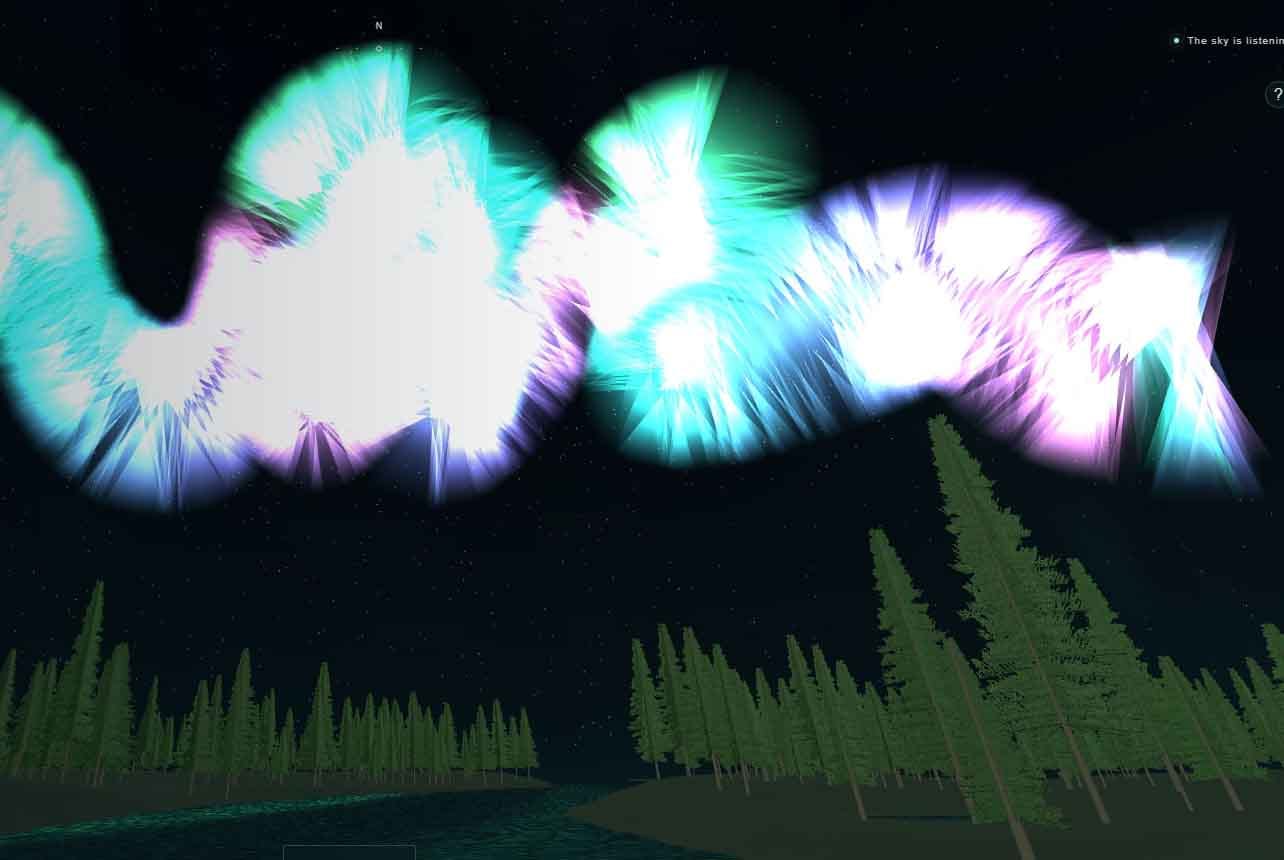
This process was very easy to iterate, Chat GPT’s Astra surprised me by the quality and polish of the final output experience. I didn’t create any 3D assets for this, all the terrain, trees and environment were procedurally generated by a single prompt.
More recently I’ve subscribed to Chat GPT’s model in Codex because in the past, I was never impressed by its ability as a creative tool. I have recently started freelancing with a top AI Lab in the field of design and I’m very impressed with what is happening now. This was my third prototype I created using Astra and I think it turned out to be a great experience that gives me the basis and framework of a realised VR experience.
Maybe the future of creative work? I’m not sure but the need for complex pipelines and barriers to entry have been greatly reduced. The price of a VR headset alone probably deters people from developing WebXR and in my case, it definitely impacted my willingness to develop these experiences. Having access to the EDC’s Meta Quests motivated me to experiment with these frameworks.
I wanted to speculate about an imaginary future where entities in a post humanism universe could perhaps create Auroras by channeling extraordinary celestial magnetism and cosmic alchemy. My yet to be born indigenous daughter is due in December and we’ve been excitedly going through baby names; we’ve decided that her middle name will be “Aurora.” This was the inspiration for this exploration in WebXR Frameworks and VR experiences. It was based off of Perlin line experiments in p5.js, Ken Perlin create the algorithm that randomized terrain and organic visual assets and won an academy award for Technical Achievement, very cool.